

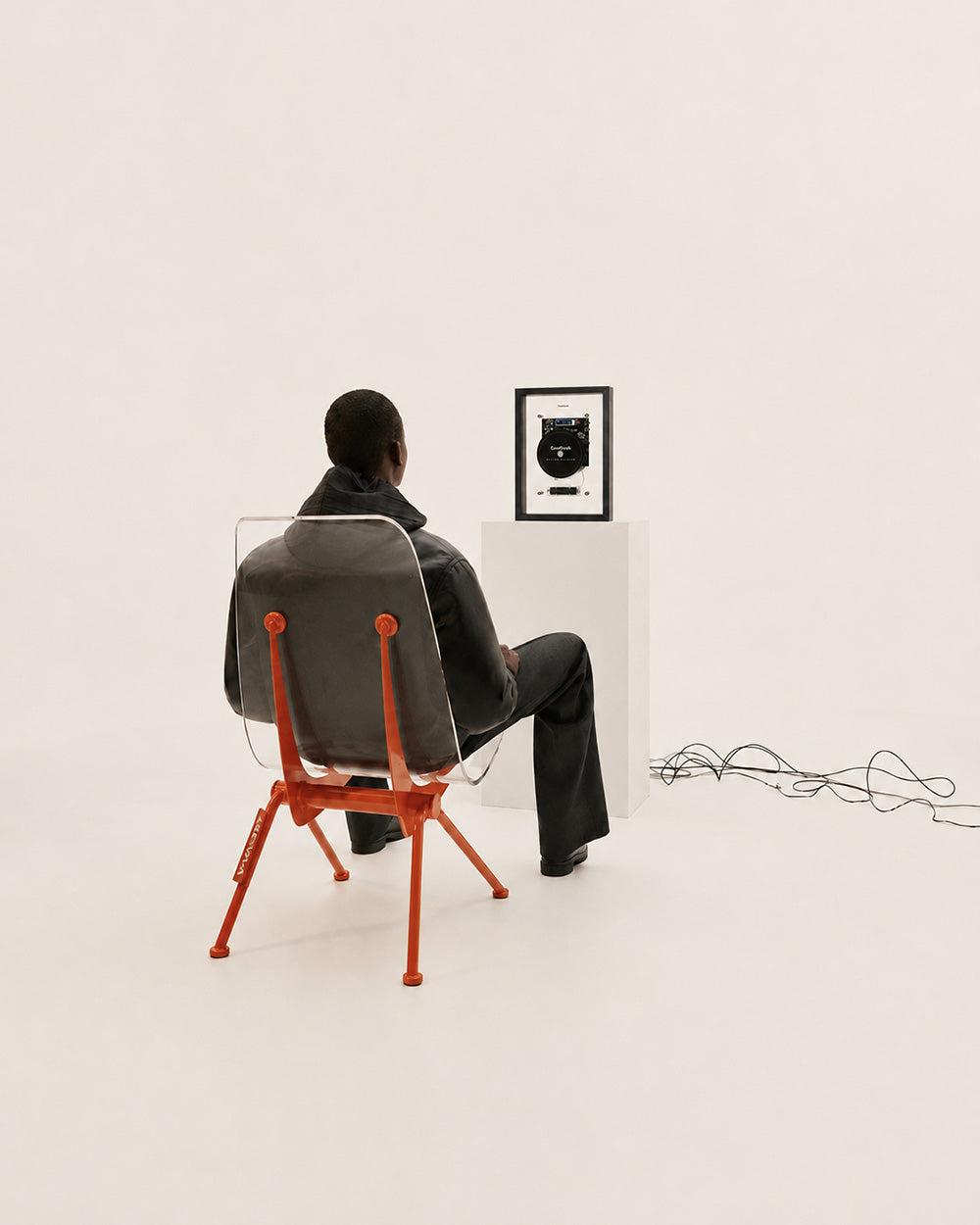

A Turntable Is Also a Spatial Decision
Buying a turntable used to feel like choosing an audio component.
Today, it is also a decision about space.
Where will it sit?
How much surface does it need?
Will it interrupt the room or improve it?
Can records stay nearby without creating clutter?
Does the player suit the way the home is actually used?
These questions matter because modern homes are often more fluid than traditional listening rooms. The living room may also be a workspace. A console may hold books, lighting, keys, plants, and music at the same time. A shelf may need to store records without looking heavy. A small apartment may not have the depth for a large setup.
So the best turntable for a modern home is not simply the one with the most features.
It is the one that fits the room’s proportion, movement, and visual rhythm.
This is where COOLGEEK’s vinyl products can speak in different ways. TS-01 suits low, clean surfaces. VS-01 suits homes that want the record itself to become visible. CS-01 suits a more intentional music corner where listening has its own place.
Different homes need different answers.
The turntable should not force the room to change around it.
It should make the room feel more complete.
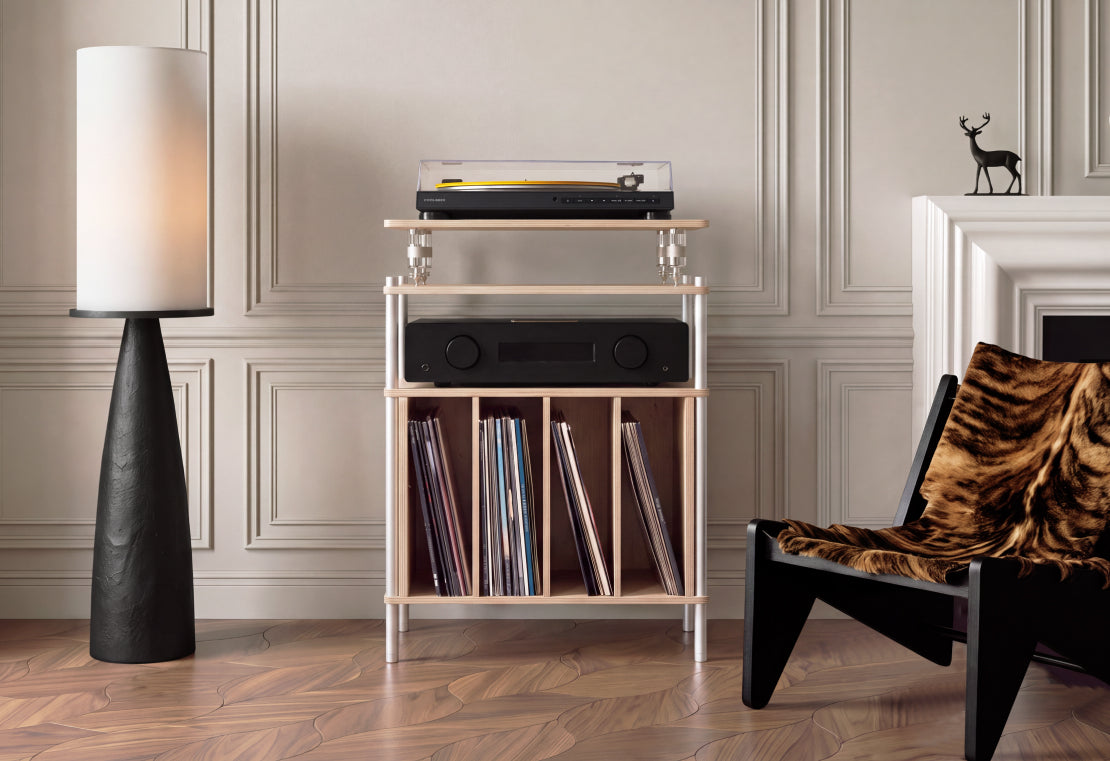
The Low Console Setup

One of the most natural places for a modern turntable is the low console.
It keeps the player visible, but not loud. It creates a clear surface for the record, the sleeve, and the movement of playing music. It also keeps the turntable close to the center of daily life without making the room feel like an audio setup.
This is where TS-01 works especially well.
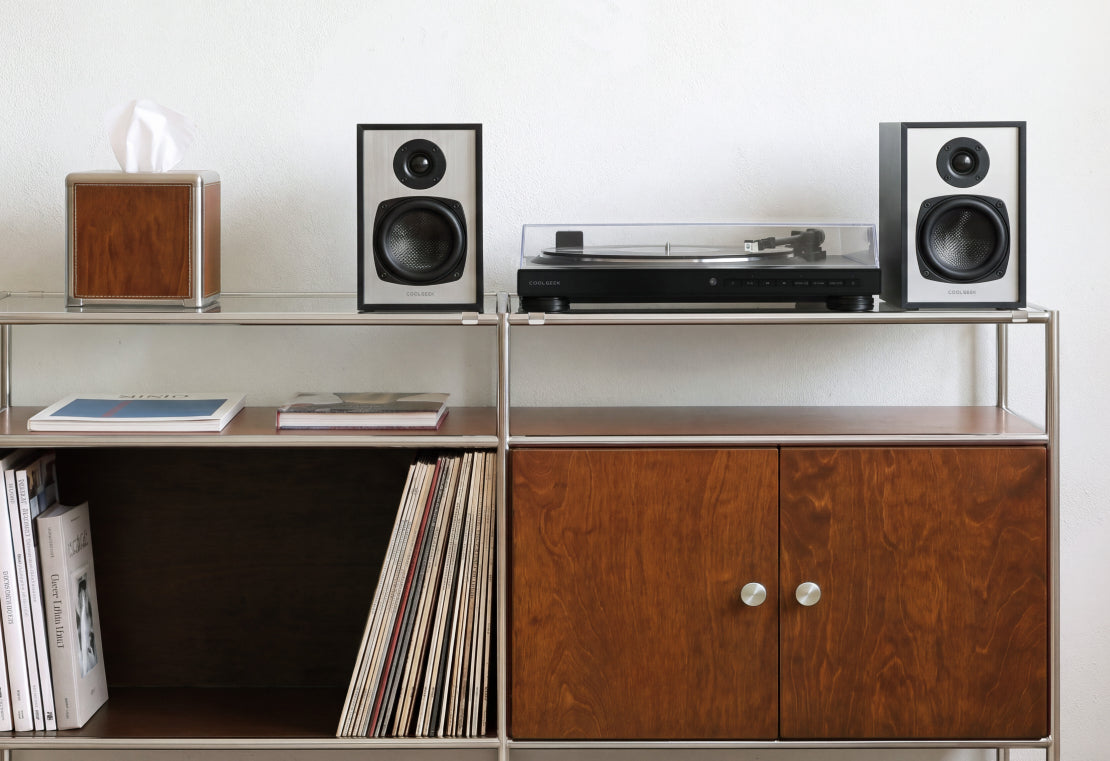
Its role is not to dominate the furniture, but to sit cleanly within it. On a sideboard, media console, or long cabinet, TS-01 can become part of the room’s horizontal structure. The record has space to be handled. The album cover has space to stand. The player feels present, but controlled.
This kind of setup is ideal for homes that want vinyl to feel available, not ceremonial.
The music is close enough to start.
The object is clean enough to remain visible.
The surface still feels like furniture, not equipment storage.
A modern turntable should understand the table it sits on.
The Vertical Moment

Some rooms do not need another flat object.
They need height.
A vertical turntable changes the way vinyl appears in a room. Instead of spreading across a surface, the record rises into view. It becomes part of the wall line, the shelf line, and the room’s visual composition.
That is the strength of VS-01.
It treats the record as something to be seen from across the room. The vinyl does not disappear into the surface of a table. It stands, moves, and becomes a quiet visual signal that music is present.
For apartments, narrow shelves, or design-focused rooms, this matters.
A vertical record player can create a music moment without requiring a large furniture footprint. It can sit near books, art prints, lamps, or album sleeves and still feel intentional.
The result is not just a different way to play vinyl.
It is a different way to place vinyl in the home.
VS-01 suits homes where music should be seen as part of the room’s personality.
The Dedicated Music Console

Some homes have space for a more serious music area.
Not a full listening room.
Not a complicated equipment rack.
But a defined corner where music has priority.
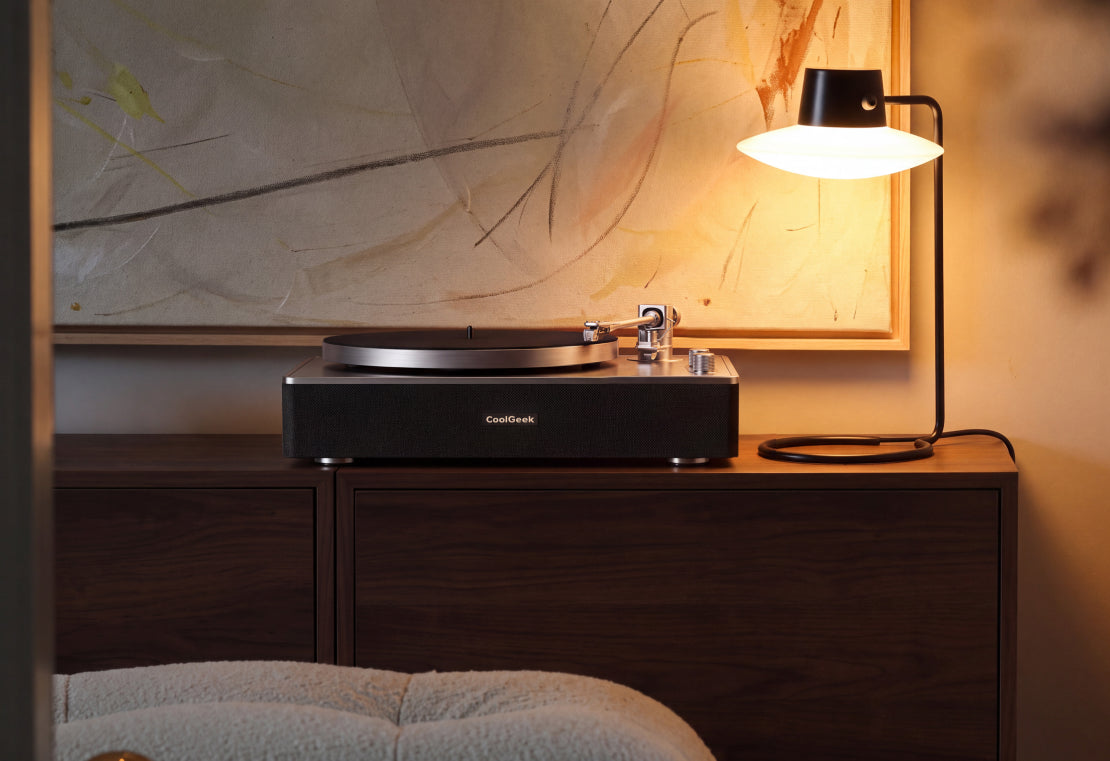
This is where CS-01 belongs.
A dedicated music console gives the turntable more context. The player is not isolated. It sits with records, lighting, seating, and enough negative space for the setup to breathe. The room does not become technical, but it becomes more focused.
For listeners who want vinyl to feel more complete, this matters.
A good music corner should have three things: a stable surface, nearby record access, and a comfortable listening position. Without those, the turntable may look good but feel inconvenient. With them, it becomes a place people naturally return to.
CS-01 works best when it is treated as the anchor of that area.
Not hidden.
Not crowded.
Not surrounded by random objects.
Just given enough room to make listening feel intentional.
Records Need Their Own Geography

A turntable never lives alone.
It brings records with it.
That means a modern vinyl setup has to think about record geography: where albums are stored, where the sleeve goes during playback, where the next record waits, and how much of the collection should remain visible.
This is often what separates a beautiful setup from a messy one.
Too many records on the surface can make the space feel heavy.
Too few records nearby can make the turntable feel disconnected.
The best arrangement gives music a clear place without letting it take over the room.
For TS-01, a few albums beside the player can make the sideboard feel ready. For VS-01, visible sleeves can support the vertical record experience. For CS-01, a more organized collection can define the entire music corner.
Records are not just accessories.
They are part of the system.
A modern home should let them stay close, but arranged with care.
Match the Turntable to the Room Type

The right turntable depends on the room.
For a small apartment, the best choice may be a player that sits cleanly on a narrow console and does not visually crowd the space. TS-01 fits this kind of environment because it can belong to daily surfaces without demanding a large setup.
For a design-led room, the priority may be visual presence. The turntable should not disappear, but it also should not feel like an audio machine. VS-01 works here because the upright record creates a strong but quiet visual identity.
For a larger living room, the goal may be to create a more complete listening area. CS-01 can help define that zone, especially when paired with records, furniture, and lighting that make the experience feel grounded.
This is why “the best turntable” is not a single answer.
A modern home asks a more personal question:
Which turntable fits this room’s way of living?
Materials Should Speak the Same Language as the Home

A turntable becomes easier to live with when its materials speak the same language as the home.
If the room is warm and soft, the product should not feel too cold.
If the furniture is minimal, the product should not feel visually noisy.
If the space is compact, the turntable should not make the surface feel heavy.
This is not only about color matching.
It is about visual weight.
Some products feel light because their lines are clean. Some feel heavier because their shapes are bold. Some feel more furniture-friendly because they sit calmly on a surface. Others become more expressive because they rise into the room.
This is where product selection becomes spatial design.
TS-01 can support a clean horizontal surface. VS-01 can add height and visual movement. CS-01 can create a stronger focal point for a dedicated setup.
A turntable that suits a modern home should not feel pasted into the room.
It should feel like it was considered with the room from the beginning.
The Best Setup Is the One the Room Accepts

A modern turntable does not need to transform the whole home.
It only needs to create one good place for music.
A sideboard becomes more useful.
A shelf becomes more personal.
A corner becomes more focused.
A record collection becomes easier to reach.
A room gains a new rhythm.
That is what it means for a turntable to suit a modern home.
It is not only about size.
It is not only about sound.
It is not only about style.
It is about whether the product can live naturally with the objects, habits, and spaces already there.
The right turntable does not fight the room.
It belongs to it.
And when that happens, vinyl becomes easier to keep close — not as a nostalgic object, not as a technical hobby, but as a daily part of the home.
A record player suits a modern home when it makes music feel placed, visible, and ready.
Not separate from life.
Part of it.
Share:
Why Your First Turntable Should Be Easy
The Small Audio Setup That Makes a Room Feel Complete